
Stations became searchable
Radio no longer depended on turning a dial. Listeners could search by station name, country, city, language, or genre and compare many stations in one place. Discovery moved from geography to meaning.
Online radio did not replace broadcast radio. It extended it. The medium grew out of a habit people already had: turning to live audio for music, news, sports, language, companionship, and a sense of place. It gave that habit global reach, a searchable shape, and a permanent home on the devices people already carry.
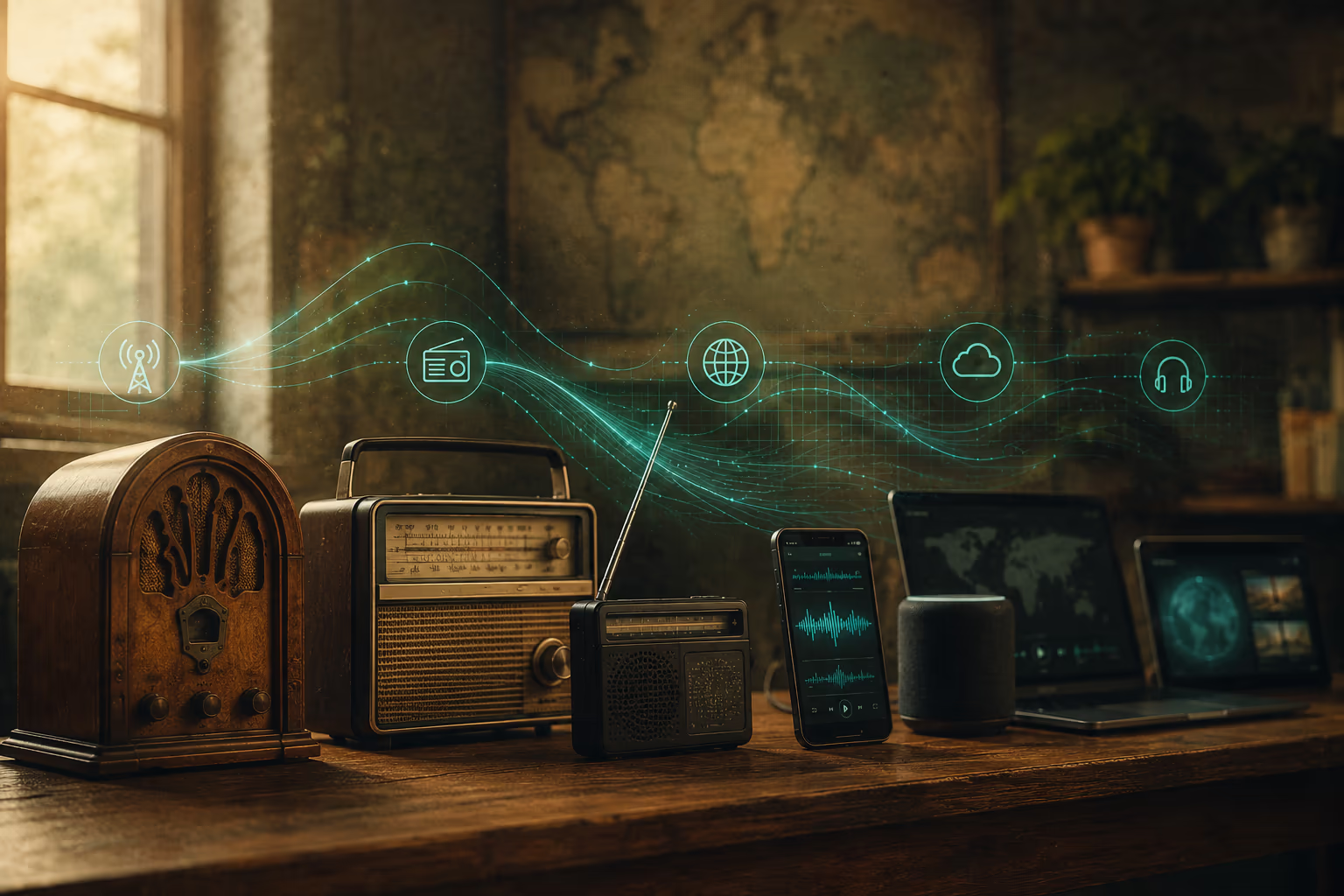
Before online radio became a technical category, radio was already a daily habit. Turning on a station meant looking for a voice, a song, a connection with a place, or the feeling that something was happening live while the rest of life continued around it.
The device changed many times. The habit did not. Understanding the history of online radio means understanding how that habit survived each infrastructure shift without losing its essential shape.
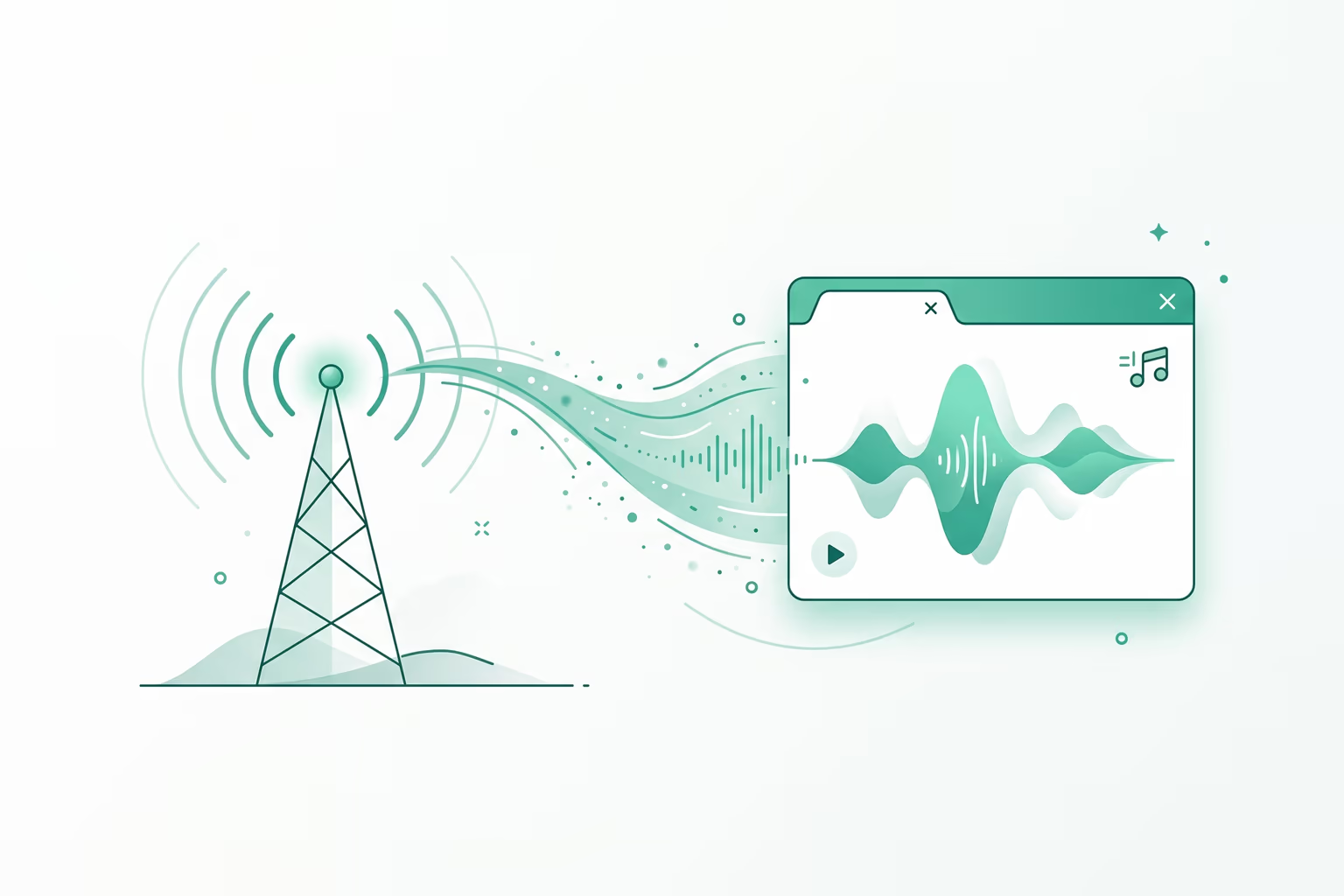
Traditional radio was built around local reach. AM carried voices across long distances and connected regions through a single transmitter. FM brought cleaner audio and gave music formats more room to become part of daily routines. In both cases, a station belonged to a territory: the area covered by its signal defined its audience.
The internet changed that relationship between station and territory. A local broadcaster could publish a live stream, and a listener on the other side of the world could find it from a browser, an app, a directory, or a connected speaker. Radio stopped being measured only in kilometers of coverage and started being measured in accessibility.
That change was not a clean break. The same stations, programs, presenters, and community voices kept sounding. They simply became reachable from anywhere a listener had a connection.
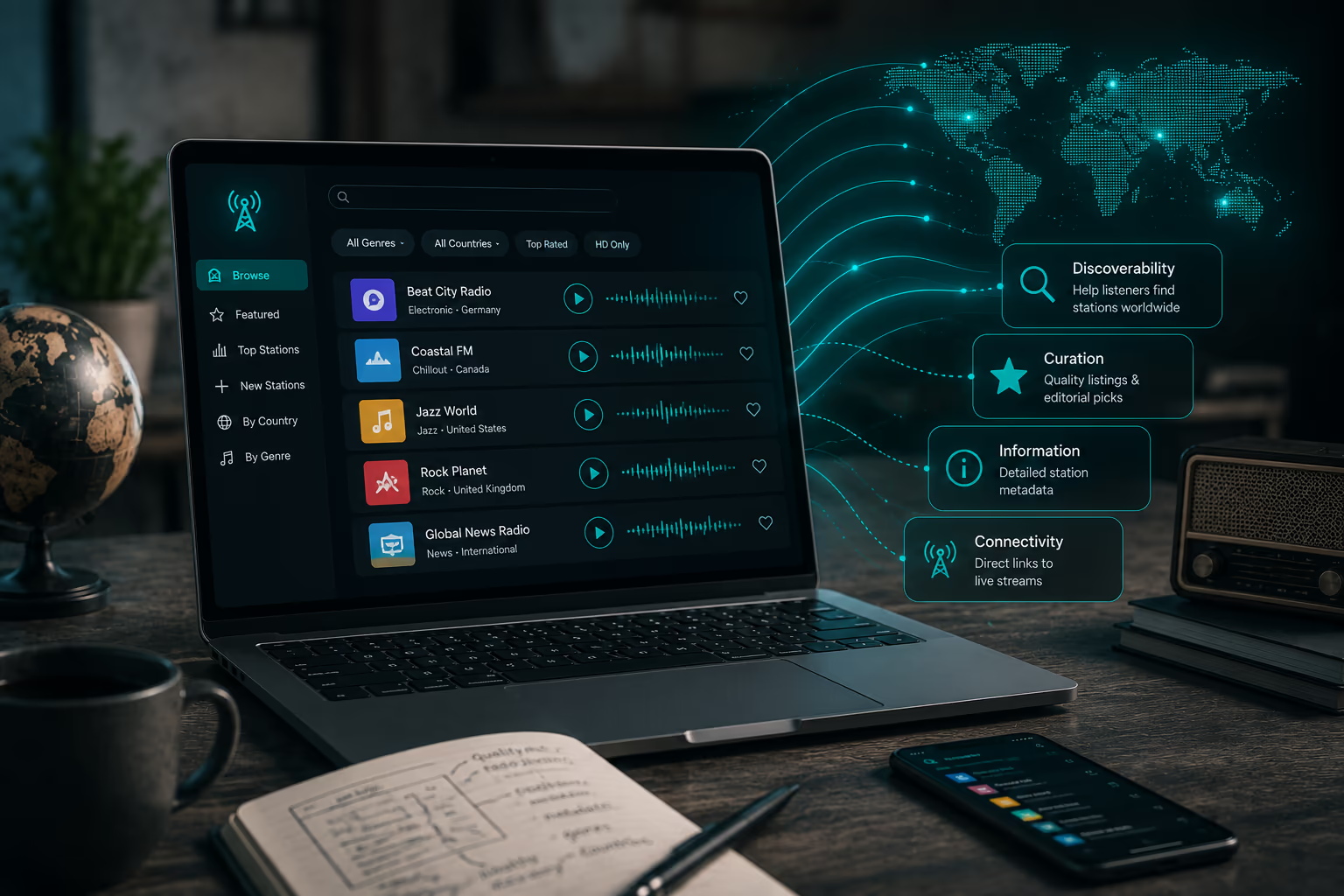
Radio streaming did not only move audio from transmitters to networks. It changed how listeners find stations, understand what is playing, and return to the voices they care about.
Radio no longer depended on turning a dial. Listeners could search by station name, country, city, language, or genre and compare many stations in one place. Discovery moved from geography to meaning.
Streams began exposing structured information: station name, current program, song title, codec, bitrate, and sometimes artwork. Online radio became easier to understand without guessing what was playing.
Phones made online radio portable in a way traditional receivers rarely were: commuting, cooking, studying, traveling, or listening to a hometown station from abroad. What was once a device became a gesture.
When enough stations began publishing streams, a new problem appeared: there was no dial. Without a common entry point, each station was an isolated URL, easy to miss unless a listener already knew where to look.
Radio directories solved that gap. Apps, web players, and public catalogs organized streams into browseable collections with filters for country, language, genre, and format. Discovery became possible again, not through frequencies, but through search.
WorldTune follows that same practical logic. It does not own the stations. It organizes publicly available radio streams provided and controlled by third-party broadcasters. Availability, rights, metadata, and regional access remain under each broadcaster's control.
This matters because online radio is a living medium. A station can change its stream address, go offline temporarily, adjust its metadata, restrict regional access, or replace its signal during special events. A directory works well when it accepts that movement instead of pretending the catalog is fixed.
It is tempting to tell the history of online radio as a sequence of technical leaps. The more interesting story is what did not change.
A person speaking in real time remains the center of gravity of radio, even when the medium is digital.
A station is not only a feed. It is a point of view. Someone decides what sounds next, and that decision is the product.
Stations can be local even when their reach is global. A radio station from another city is not the same thing as a generic playlist.
Radio accompanies. It is active background, not always the main object of attention. Online radio inherited that role.
The online radio evolution made live stations more reachable, but its value is not only convenience. It also opened practical ways to hear places, languages, and communities directly.
Live stations offer local voices, accents, regional music choices, public affairs, sports, and community updates that generic catalogs rarely reproduce. A small station can be the best window into a place.
Listening to stations from another country exposes learners to natural speech, everyday vocabulary, music rotation, and regional references. It is one of the most accessible forms of passive language immersion.
Radio is programmed by people and communities. That makes it a useful counterpoint to recommendation feeds that often repeat what a listener already knows. Radio can still surprise.
Knowing something is live in another place changes the relationship with audio. It is not an archive. It is a shared event, and that is part of why radio remains distinct from on-demand formats.
The future of online radio is less about replacing older formats and more about making live audio easier to find, understand, and carry across contexts.
Streams can expose richer context: now playing, program, artwork, language, format, and technical details.
The same streams can move across browsers, mobile apps, cars, connected speakers, and future listening surfaces.
Directories remain a bridge between local broadcasters and global audiences looking for something specific.
Online radio does not replace AM, FM, DAB+, podcasts, or on-demand audio. It coexists with them and often extends them.
The general direction is clear: radio becomes easier to find, richer in context, and more portable without stopping being what it has always been at its core.
The history of online radio shows that durable media are not defined only by their technology. They are defined by what people keep doing with them. Radio survived television, tapes, discs, downloads, on-demand streaming, and podcasts because it serves a different purpose: being there, live, while life continues.
The internet did not change that purpose. It removed the borders around it.
If you want a practical workflow to find and save stations, read the online radio listening guide. To understand what happens underneath each stream, review internet radio streaming technology and how online radio metadata works. You can also open the WorldTune web player, learn more about WorldTune, or use the contact page to report catalog issues.